
Running a dental practice takes more than clinical care. Every day, dental teams are managing...
Read More
Dental Front Desk Guide
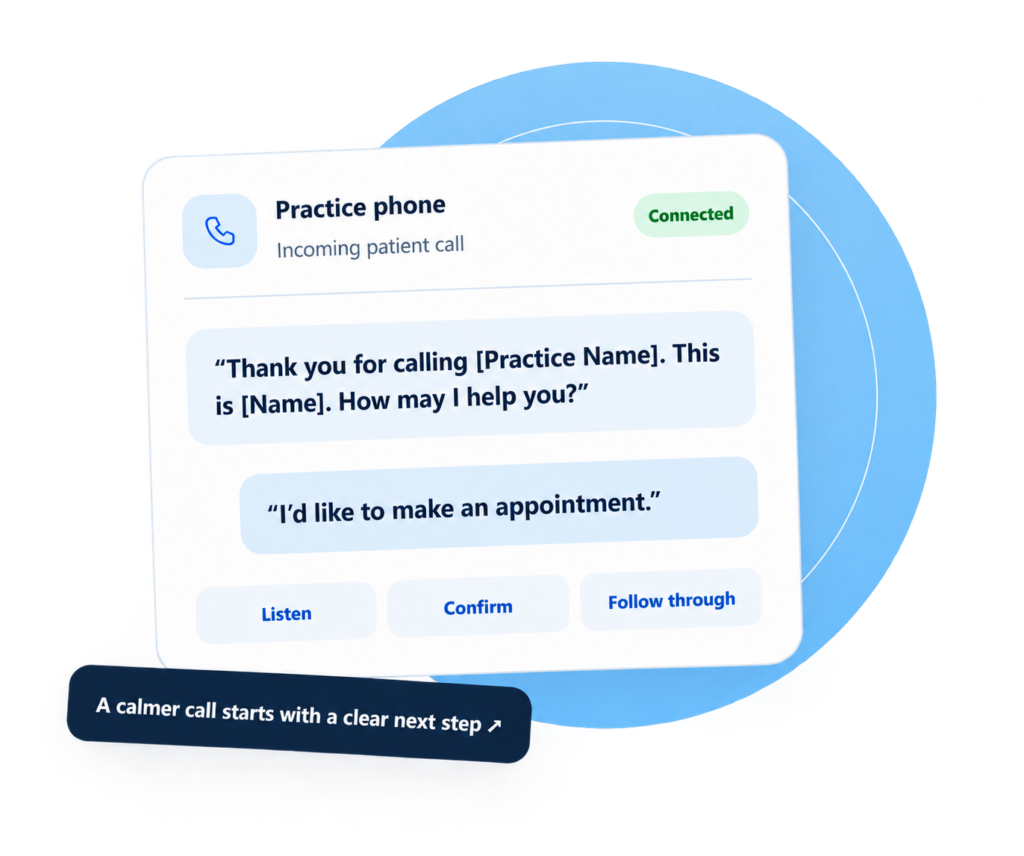
A caller may be a new patient deciding where to book, an existing patient trying to change an appointment, or someone worried about a dental concern. The first conversation shapes how easy it feels to get help.
Good phone etiquette means more than sounding friendly. It means giving the caller your attention, finding out what they need, handling information carefully, and making the next step unmistakable. The American Dental Association’s patient intake guidance recommends a consistent greeting and scripts for frequent call topics. The goal is a reliable experience without making the conversation sound rehearsed.
The simple rule for every call
Greet → listen → act → confirm. Say who you are, understand the request, take the appropriate step, and tell the caller what happens next.
Greet
Identify the practice and yourself.
Listen
Let the caller explain the reason for calling.
Act
Schedule, answer, or route the request.
Confirm
Repeat the next step and close warmly.
Answer in a calm voice and give the practice name, your name, and an invitation to speak. Avoid a rushed “Dental office, hold please” that gives the caller no chance to explain.
Greeting script
“Thank you for calling [Practice Name]. This is [Name]. How may I help you?”
Let the caller finish, then reflect the main request back in plain language: “You’re calling to move your cleaning appointment, correct?” Ask one relevant question at a time. If the caller sounds upset, acknowledge the concern before moving into logistics. A professional tone should feel patient and natural, even when the front desk is busy.
Use the practice’s approved scheduling rules, call notes, and routing process. If you need to check something, tell the caller what you are doing. If the answer belongs with a clinician or billing specialist, connect the caller with that person or arrange a specific follow-up instead of guessing.
For an appointment, repeat the date, time, location, and any approved arrival instructions. For a message or callback, explain who will follow up and how. Then ask whether there is anything else you can help with and thank the caller.
Closing script
“You’re scheduled for [day and time] at [location]. Is there anything else I can help you with today? Thank you for calling.”
Use these as flexible starting points. Staff should speak naturally and follow your practice’s actual policies.
New patient inquiry
Find out why the patient is calling before offering the next available slot. Explain the next step simply.
“We’d be happy to help. What brings you in? I can look at the appointment options that fit your needs.”
Placing a caller on hold
Ask first, explain why, and return with an update if it takes longer than expected. Offer a callback when appropriate.
“May I place you on a brief hold while I check the schedule? If you prefer, I can take your number and call you back.”
Transferring a call
Say who can help, confirm a callback number, and give the receiving teammate the relevant context when your process allows it.
“Our billing team can review that with you. May I confirm the best number in case we get disconnected?”
An upset patient
Stay steady, acknowledge the experience, and focus on a practical next step. Do not promise an outcome you cannot approve.
“I’m sorry this has been frustrating. Let me make sure I understand what happened so I can get this to the right person.”
Check availability before promising an appointment. Offer choices that fit the patient’s request and the practice’s scheduling rules. When a caller needs to cancel or move a visit, confirm which appointment is changing, then repeat the new details before ending the call.
Explain what your team can check and what still needs review. Avoid stating that a treatment is covered or quoting a final patient responsibility without the information and authority to do so. If a specialist needs to respond, capture the question accurately and explain the handoff.
Insurance question
“I can check the information we have, or have the right team member review your benefits and follow up. Would you like me to take the details of your question?”
Listen carefully and follow the practice’s approved clinical triage and escalation process. Front desk staff should not diagnose symptoms or promise treatment over the phone. Make sure the request reaches the appropriate clinical team member promptly, and use your practice’s emergency instructions when applicable.
Acknowledge the caller before asking to hold, and keep the request visible in your call workflow. When several calls arrive at once, a reliable callback process helps prevent messages from getting lost. Never tell a caller someone will call at a specific time unless that commitment can be met.
Follow the practice’s identity verification, documentation, and communication preferences before discussing patient details. Be mindful of who can hear the conversation at the front desk. For a voicemail, keep the message limited to what your policy allows; the U.S. Department of Health and Human Services’ privacy guidance says healthcare providers may leave messages but should limit information disclosed and honor reasonable requests for confidential communication.
A practical voicemail
“Hello, this is [Name] calling from [Practice Name]. Please call us back at [number].” Follow your practice’s policy and the patient’s stated contact preferences.
When handing off a message, record only the details the next person needs in the approved system. Avoid discussing sensitive information in an open waiting area or sharing it with someone whose identity and role have not been checked under your procedures.
Keep this short checklist near the phone or add it to your team’s call handling guide.
Before the call
During the call
Before you hang up
Write down a standard greeting, common call paths, the information staff may share, and the steps for urgent requests. Practice realistic scenarios in brief team role-plays, then update the guide when the team encounters a recurring question. The ADA’s patient intake recommendations also encourage scripts and role-playing for familiar call situations.
Review whether messages are reaching the right person and callbacks are being completed. If the front desk regularly has to choose between in-person patients and incoming calls, additional reception coverage may help. DentVia’s Virtual Dental Receptionist service supports practices with trained remote receptionists who can handle approved calls, scheduling, messages, and follow-up using the practice’s instructions.
Introduce the practice and yourself, listen to the caller’s request, speak clearly, handle the request within your role, and confirm the next step. Ask before placing someone on hold and follow your practice’s privacy rules.
A useful greeting is: “Thank you for calling [Practice Name]. This is [Name]. How may I help you?” It tells the caller where they reached, who is speaking, and how to begin.
Let the caller explain, acknowledge the concern without arguing, clarify what happened, and explain who can help and what will happen next. Avoid promising a result that has not been approved.
Follow the practice’s clinical triage procedure and route the question to an appropriate clinician. Front desk staff should not diagnose symptoms or offer advice beyond approved instructions.
When your in-office team is juggling patients, scheduling, and incoming calls, trained remote reception support can help keep the phone experience consistent with your practice’s instructions.
Running a dental practice takes more than clinical care. Every day, dental teams are managing...
Read MorePatient Retention Guide Why Dental Practices Lose Momentum The small gaps between calls, treatment decisions,...
Read MoreRunning a dental practice is rewarding, but the administrative side can quickly become overwhelming. Between...
Read More