Running a dental practice takes more than clinical care.
Every day, dental teams are managing patient conversations, treatment decisions, chairside care, scheduling changes, phone calls, reminders, follow-ups, insurance questions, and the administrative work that keeps the practice running smoothly.
Some of that work needs to happen inside the practice.
But not all of it does.
For many dental practice owners and office managers, the challenge is knowing which responsibilities should stay with the in-office team and which can be supported by a virtual dental assistant or remote dental assistant. When that balance is clear, the practice can operate more efficiently, reduce staff stress, and create a better patient experience.
Remote support is not about replacing the human side of dentistry. It is about helping dental teams focus on the work that matters most.
What Tasks Should Stay In-House at a Dental Practice?
Certain parts of dentistry should always remain with the in-office team.
Clinical care, treatment planning, chairside conversations, hands-on procedures, and the in-person patient experience belong inside the practice. These moments require professional judgment, trust, and personal interaction between patients and providers.
Patients want to feel heard, understood, and cared for when they visit the office. They rely on the clinical team for explanations, guidance, and reassurance throughout their treatment journey.
A virtual dental assistant cannot replace those interactions.
Instead, remote dental support should create more time for the clinical team to focus on delivering exceptional patient care.
What Dental Office Tasks Can Be Supported Remotely?
While the clinical team is focused on patients, administrative work continues throughout the day.
Calls need to be answered. Appointments need to be confirmed. Reminders need to be sent. New patient inquiries require attention. Follow-up communication must happen consistently.
These tasks are essential to a successful dental practice, but they do not always need to interrupt the clinical team during a busy day.
A remote dental assistant can help support:
- Appointment confirmations
- Patient reminders
- Scheduling support
- Follow-up communication
- New patient inquiries
- Call overflow management
- Administrative coordination
- Patient communication and updates
By providing dental administrative support behind the scenes, remote team members help reduce interruptions and keep the practice running efficiently.
Why Clear Responsibilities Matter
Remote support works best when responsibilities are clearly defined.
The practice should understand what the in-office team handles, what the remote support team manages, and how information moves between both groups. Without clear processes, tasks can become delayed, duplicated, or overlooked.
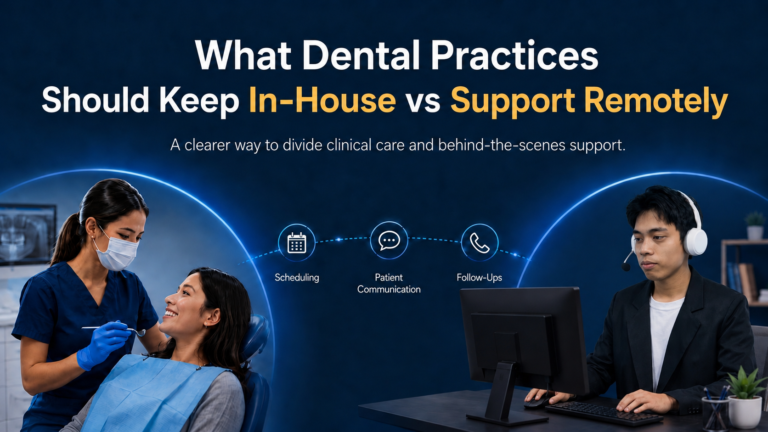
For example, the in-office team may manage treatment discussions, clinical questions, and chairside care. Meanwhile, a virtual dental assistant can assist with scheduling support, appointment confirmations, reminders, follow-ups, and patient communication.
When everyone understands their role, remote support becomes a seamless part of the dental practice management workflow.
The result is better organization, improved communication, and a more efficient patient experience.
Remote Support Should Strengthen Your Team
The goal of remote support is not to replace the in-office team.
The goal is to help dental teams focus on the responsibilities that only they can perform.
Front office staff and clinical teams already balance a wide range of responsibilities throughout the day. They guide patients through treatment, answer questions, manage schedules, and provide support during every stage of care.
When administrative work continues to pile up, it can pull attention away from patient interactions.
With the right remote dental assistant support, practices do not have to choose between helping patients and keeping up with administrative demands.
The clinical team stays focused while important behind-the-scenes tasks continue to move forward.
How Remote Support Improves the Patient Experience
Patients notice when communication is consistent.
They notice when reminders arrive on time, appointments are confirmed, questions are answered, and follow-ups happen as expected.
A positive patient experience does not begin and end in the dental chair. It includes every interaction before, during, and after the visit.
Strong patient communication helps patients feel informed, supported, and confident about their care. When communication is consistent, patients are less likely to miss appointments, feel uncertain about next steps, or disengage from treatment.
Virtual dental assistants help maintain that consistency by ensuring communication continues even when the in-office team is busy.
That reliability helps build trust and strengthens patient relationships over time.
The Takeaway
Not every responsibility in a dental practice needs to be handled inside the office.
Clinical care, treatment planning, chairside conversations, and patient relationships should remain with the in-office team. However, scheduling support, appointment confirmations, reminders, follow-ups, patient communication, and other administrative tasks can often be supported remotely.
The key is creating the right structure.
When dental practices clearly define which tasks stay in-house and which tasks receive remote support, the entire team can work with greater focus and less pressure. Patients receive consistent communication, staff can prioritize patient care, and the practice operates more efficiently.
DentVia helps dental practices streamline daily operations with trained virtual dental assistants who provide scheduling support, patient communication, appointment reminders, confirmations, follow-ups, and dental administrative support.
With the right support in place, your practice can stay organized, responsive, and focused on delivering an outstanding patient experience.